
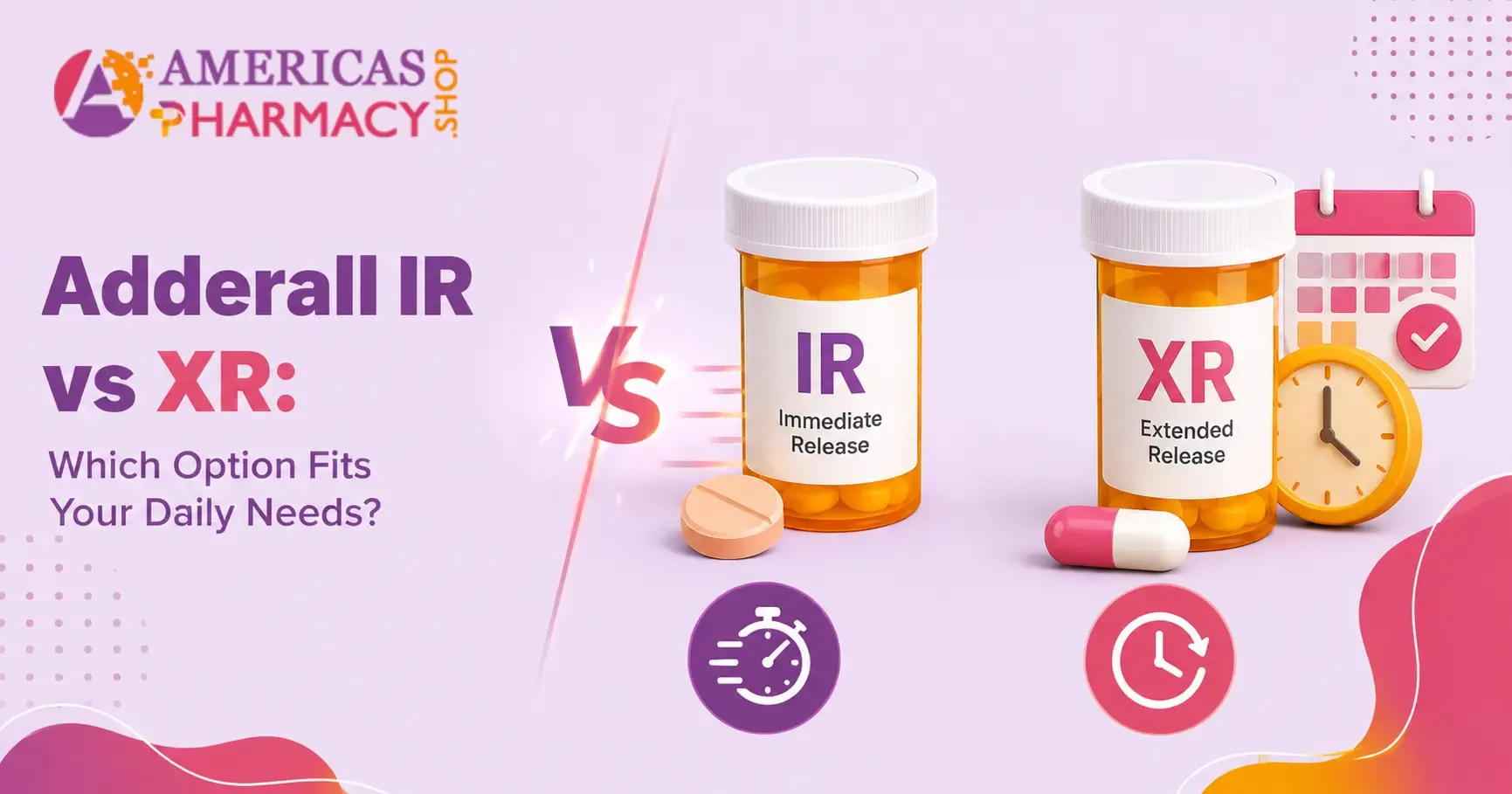
Adderall IR vs XR

Adderall IR vs XR: Which Option Fits Your Daily Needs?

Choosing the right ADHD medication schedule can be challenging, especially when patients compare Adderall IR vs XR. Both medications are commonly discussed for ADHD management, but they are not identical. The main difference lies in how they release the medication and how long the effects may last during the day.

Many patients ask whether it is better to take Immediate Release (IR) or Extended Release (XR). The answer often relies on job schedules, study habits, symptom patterns, and medical advice.

Here’s a guide to Adderall IR versus XR, explaining how each form works, its differences, potential benefits, and factors to consider to help you decide which better meets your daily needs.

Understanding Adderall and Its Role in ADHD Treatment

Adderall is a prescription drug that is commonly used as a part of treatment for ADHD. It works by altering a number of brain chemicals critical for attention, focus and impulse control.

Healthcare providers may recommend different formulations depending on:

  • Duration of symptom control needed
  • Daily activity schedules
  • School or work commitments
  • Individual response to treatment
  • Previous medication history

When comparing Adderall IR to XR, patients usually choose a shorter duration of action with flexible dosage or extended coverage throughout the day.

Both formulations contain identical active ingredients, but their delivery mechanisms differ.

What Is Adderall IR?

Adderall IR stands for Immediate Release. This version releases the medication shortly after it is taken. Because of this faster release pattern, many patients notice effects earlier than with extended-release formulations.

The effects generally do not last as long as XR, which means some individuals may require more than one dose throughout the day under medical supervision.

Features of Adderall IR

Some common characteristics include:

  • Faster release into the body
  • Shorter duration of symptom coverage
  • Possible need for multiple daily doses
  • Greater flexibility for timing adjustments
  • Easier dose customization in certain cases

Patients with fluctuating schedules often discuss Adderall IR versus XR, as IR offers the flexibility that some schedules require.

For example, someone working only part of the day may not need all-day coverage. In those situations, shorter action may sometimes be considered.

What Is Adderall XR?

Adderall XR means Extended Release. This formulation is designed to release medication gradually over time instead of all at once.

The goal of XR is to provide longer symptom support during the day with fewer doses.

Many people prefer XR because it often fits structured routines such as:

  • Hours of full-time work
  • Hours in school
  • Classes in college
  • Long hours of study
  • Work environments

Some people take it once in the morning rather than numerous times a day.

Key Characteristics of Adderall XR

Adderall XR may offer:

  • Extended symptom control
  • Reduced dosing frequency
  • More convenience during busy days
  • Steady release patterns
  • Support for longer activities

When discussing Adderall IR vs XR, patients frequently choose XR when convenience becomes important.

Feature

Adderall IR

Adderall XR

Release Type

Immediate release

Extended release

Dosing Frequency

Often multiple doses

Usually once daily

Onset Speed

Faster

Gradual

Duration

Shorter coverage

Longer coverage

Flexibility

Higher

Moderate


Adderall IR vs XR for Working Professionals

Timing of symptoms affects productivity; people who are highly occupied at work usually talk about comparing Adderall IR vs XR.

When XR May Be Helpful

XR is frequently discussed by people who:

  • Work standard office hours
  • Attend long meetings
  • Travel during workdays
  • Need continuous focus
  • Prefer fewer medication interruptions

A single morning dose may reduce the need to remember additional doses later.

When IR May Be Considered

IR sometimes attracts individuals who:

  • Shorten working hours
  • Have alternating schedules
  • Require symptom control at times
  • Preferred customizable time

Adderall IR vs XR for Students and Academic Performance

Students have extensive periods of focus, homework, projects, and exams. Consequently, many will debate Adderall IR vs XR before talking about therapy options.

Benefits Students Often Seek in XR

Extended release options may fit students who need:

  • Coverage during full school days
  • Support through lectures
  • Reduced interruptions
  • Better consistency between classes

Some college students with busy schedules desire lengthier doses of activity.

Situations Where IR May Be Discussed

Immediate release options may be considered for:

  • Evening study groups
  • Flexible class hours.
  • Academic part-time schedule
  • short attention spans required

The choice depends heavily on how symptoms affect daily performance.

Lifestyle Factors That Influence Adderall IR vs XR Decisions

Lifestyle is a big factor in choosing medication regimes.

Here are some of the most frequently asked questions:

Do You Need All-Day Support?

People who remain active from morning until evening may discuss XR more often.

Is Flexibility Important?

Patients whose days change frequently sometimes ask providers about IR.

Are You Comfortable Taking Multiple Doses?

Some individuals prefer one daily dose. Others do not mind separate dosing schedules.

Does Work or School Require Continuous Focus?

Long commitments may influence discussions around extended coverage.

Comparing Adderall IR vs XR becomes easier when patients evaluate how symptoms appear during normal activities.

Potential Side Effects and Safety Considerations

As with many prescription drugs, both the IR and XR formulations might have harmful consequences.

Commonly discussed effects include:

  • Loss of appetite
  • Dry mouth
  • Trouble sleeping
  • Higher heart rate
  • Anxiety, nervousness
  • Headache
  • Nervousness
  • Upset stomach

Not everyone experiences side effects in the same way.

Patients should always:

  • Follow prescribed instructions
  • Avoid self-adjusting doses
  • Report unusual symptoms
  • Discuss medication interactions
  • Attend regular medical follow-ups

Medication safety is especially important when evaluating Adderall IR vs XR, as the dosing schedules differ.

Adderall IR vs XR: Which Option May Fit Different Daily Routines?

Here are some instances that could illustrate how differences in lifestyle may impact talks about medications.

Office Employee

A 9 AM to 5 PM worker might require symptom support for longer periods of time.

College Student

A student with lectures, assignments, and evening study sessions may need longer help.

Potential conversation: XR.

Freelancer or Remote Worker

Someone who works for only a few hours daily would like flexibility.

Talk topic: IR.

Shift Worker

Workers with variable schedules typically require flexible timing.

Possible subject for discussion: IR.

These examples are not intended as therapy suggestions. They’re only demonstrating that Adderall IR and XR rely on different habits.

Common Questions About Adderall IR vs XR

Is Adderall XR stronger than IR?

Not necessarily. The major difference is release timing rather than strength.

XR releases gradually while IR works more quickly.

Can patients switch from IR to XR?

Changes should be made solely by healthcare providers. There is no advice on switching your own drugs.

Does IR work faster?

IR is generally designed for faster release compared with XR.

Is XR more convenient?

Many people find XR convenient because it often involves fewer doses.

Which lasts longer?

XR is designed for extended coverage compared with immediate-release formulations.

Important Things to Discuss With a Healthcare Provider

Before choosing between Adderall IR vs XR, patients may want to discuss:

  • Daily schedules
  • Work demands
  • Academic responsibilities
  • Sleep patterns
  • Previous medication experiences
  • Existing medical conditions
  • Other medications are being used

These discussions help create more personalized treatment approaches.

Adderall IR vs XR and Long-Term Medication Planning

Treatment strategies might alter over time.

Someone who starts with flexible requirements may need extended coverage later. Similarly, XR users could someday also talk about varied timetables.

Medication planning often evolves because:

  • Jobs change.
  • School routine changes
  • Symptoms vary.
  • Lifestyle expectations are rising
  • Medical reactions are diverse

That’s why talking to your healthcare providers is still really vital.

Final Thoughts

The Adderall IR versus XR debate continues, as each formulation serves a distinct purpose. Immediate Release alternatives offer flexibility and a faster onset, while Extended Release options are designed to last longer and require less frequent dosing.

It’s not that one is better than the other. The correct one relies on lifestyle, job demands, academic timetables, symptom timing, and professional medical advice.

Patients considering ADHD treatment should focus on understanding how their daily routine works and discuss those needs with licensed healthcare providers.

Selecting between Adderall IR vs XR becomes easier when treatment decisions are based on medical guidance rather than convenience alone.
Understanding ADHD Types: Symptoms, Causes, and Treatments

Understanding ADHD Types Symptoms, Causes, and Treatments

Learn about the different types of ADHD, their symptoms, causes, and effective treatments. Understand how ADHD affects children and adults, and explore diagnosis and management options.

Imagine sitting in a classroom, trying to concentrate while the world around you seems to be moving at lightning speed. This scenario resonates with many individuals facing Attention-Deficit/Hyperactivity Disorder (ADHD), a condition often misunderstood and surrounded by stigma. Despite its prevalence, ADHD is frequently seen as merely a childhood disorder, leading to underdiagnosis or misdiagnosis in adults. For instance, consider a college student overwhelmed by the demands of lectures and assignments, struggling to focus and feeling lost in a sea of information. This confusion can hinder effective support and management for those affected by ADHD.

Understanding ADHD Easly : Visit AmericasPharmacy.Shop

Different Types of ADHD: The Foundation of Understanding

What Is ADHD?

Attention-Deficit/Hyperactivity Disorder (ADHD) is a neurodevelopmental disorder characterized by symptoms of inattention, hyperactivity, and impulsivity. It is important to note that ADHD is not a one-size-fits-all condition; it is categorized into three main types:

1. Inattentive Presentation: Individuals with this type often struggle to maintain focus on tasks and may frequently forget appointments or lose things necessary for tasks.

2. Hyperactive-Impulsive Presentation: This type is marked by excessive fidgeting, impulsivity, and difficulty remaining seated in situations where it is expected.

3. Combined Presentation: Individuals exhibit symptoms of both inattentiveness and hyperactivity-impulsivity, making it the most common presentation among those diagnosed with ADHD.

Understanding these types can lead to more tailored and effective management strategies, helping to address the unique challenges each individual may face.

Get UpTo 30% Off Only On AmericasPharmacy.shop

The Real Cost of Ignoring ADHD: Why It Matters

The Impact of ADHD on Everyday Life

ADHD can significantly affect various aspects of life, including academic performance, workplace productivity, and personal relationships. Many individuals with ADHD face challenges in maintaining focus, which can lead to frustration and low self-esteem. For example, a parent may struggle to help their child with homework due to the child’s inability to concentrate, often resulting in feelings of inadequacy for both parties.

Moreover, untreated ADHD can result in increased healthcare costs, lost productivity, and a higher likelihood of mental health issues. According to the CDC, about 6.1 million children in the U.S. have been diagnosed with ADHD, with many continuing to experience symptoms into adulthood, highlighting the necessity of recognizing and addressing ADHD’s impact on life.

Under the Hood: How ADHD Actually Functions

The Neuroscience of ADHD

ADHD is linked to differences in brain structure and neurotransmitter activity, particularly involving dopamine. Research indicates that individuals with ADHD may have lower levels of dopamine, affecting attention and impulse control. Neuroimaging studies have shown structural differences in the prefrontal cortex of individuals with ADHD, a brain region critical for decision-making and behavior regulation.

Neurotransmitters and ADHD: Neurotransmitters play a crucial role in regulating attention and behavior. Dopamine and norepinephrine are particularly important in managing focus and impulse control. Medications that increase dopamine levels can help alleviate symptoms in some individuals with ADHD, demonstrating the biological underpinnings of this disorder.

The Game-Changing Advantages of Understanding ADHD Symptoms

Symptoms of ADHD

ADHD symptoms can be categorized into inattentive, hyperactive-impulsive, and combined presentations. Individuals may present with symptoms such as:

1. Inattention: Difficulty sustaining attention, careless mistakes, and forgetfulness.

2. Hyperactivity: Excessive talking, fidgeting, and difficulty remaining seated.

3. Impulsivity: Interrupting others, difficulty waiting for one’s turn, and making hasty decisions without considering the consequences.

Recognizing and understanding these symptoms is crucial for effective diagnosis and treatment. Understanding the symptoms can also help in identifying the causes of ADHD, which may include biological, environmental, and socioeconomic factors.

Causes of ADHD

ADHD is influenced by a combination of factors. Genetics play a significant role, as a family history of ADHD increases the likelihood of diagnosis. Additionally, prenatal exposure to substances like tobacco and alcohol, as well as adverse childhood experiences, can contribute to the development of ADHD.

Understanding the causes can help in identifying at-risk individuals and providing early interventions, ultimately leading to better management outcomes.

Navigating ADHD Management Pitfalls: What to Avoid

Common Misunderstandings About ADHD

Many misconceptions about ADHD can hinder effective management and support. For instance, ADHD is often mistakenly viewed as a lack of discipline rather than a legitimate disorder. This misunderstanding can lead to frustration among parents and teachers who may not recognize the underlying issues affecting behavior.

Dispelling myths about ADHD is essential for fostering understanding and support. Increased awareness can lead to more compassionate approaches to treatment and intervention, ultimately benefiting those affected by ADHD.

Mastering ADHD Management: Expert Strategies for Success

Comprehensive Treatment Approaches

Successful ADHD management requires a multifaceted approach. This can include behavioral therapy, medications, and lifestyle adjustments such as diet and exercise. A combination of cognitive-behavioral therapy and medication may lead to significant improvements in managing symptoms.

The Role of Support Systems: Support from family, schools, and professional coaches is vital in managing ADHD. A strong support network can provide encouragement and practical assistance, enhancing management strategies and improving quality of life.

Your ADHD Action Plan: When to Seek Help

Signs It’s Time to Seek Professional Help

Certain signs indicate it may be time to seek evaluation for ADHD. Persistent challenges in focusing, managing time, or handling emotions can signal the need for professional help. For example, a student’s declining grades may indicate that ADHD symptoms are impacting performance, making it essential for parents and educators to recognize these signs early.

Who ADHD Affects: Understanding Demographics and Treatment Needs

Understanding ADHD Across Ages and Genders

ADHD affects individuals differently based on age and gender, necessitating tailored approaches. ADHD  Symptoms may present differently in boys versus girls, and adults may experience unique challenges. For instance, girls may internalize symptoms, leading to underdiagnosis compared to boys who may exhibit more overt symptoms.

Tailoring treatment plans to individual needs can enhance effectiveness, ensuring that all individuals receive the support they need throughout their lives.

Buy Adderall Online : AmericasPharmacy.shop-Get Affortable Price

The Future of ADHD Treatment

Ongoing research is critical for improving ADHD management. New findings on treatment efficacy and emerging therapies offer hope for better outcomes. Advances in technology and therapy options may lead to more personalized treatment plans, empowering individuals and families in their ADHD journey.

Putting It All Together

Understanding the different types of ADHD, their symptoms, causes, and treatment options is essential for effective management. By recognizing the complexities of ADHD, individuals and families can foster better support systems and explore the most effective strategies for managing this condition. If you’re looking for more information, learn more about our services. This knowledge not only helps in navigating the challenges of ADHD but also promotes a compassionate and informed approach to treatment.

Conclusion

Understanding the different types of ADHD—whether inattentive, hyperactive-impulsive, or combined—helps create greater awareness of how the condition affects individuals in unique ways. While symptoms can vary widely, early identification and proper support make a significant difference in daily functioning and long-term well-being. Although the exact causes of ADHD remain complex, advances in research show strong links to genetics, brain development, and environmental factors. With effective treatments such as medication, behavioral therapy, lifestyle changes, and educational support, people with ADHD can manage their symptoms and thrive at every stage of life. Empowering yourself with knowledge is the first step toward understanding, acceptance, and improved quality of life for those living with ADHD.

Visit Official Website: https://americas-pharmacy.amebaownd.com/ 

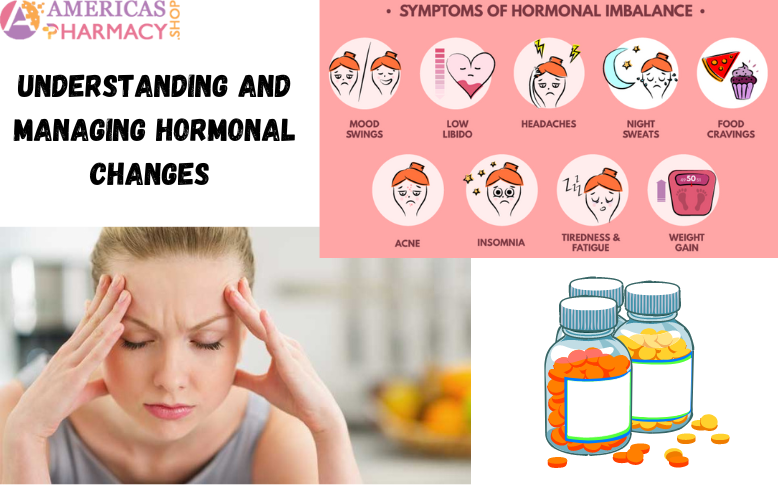
Understanding and Managing Hormonal Changes in Women

Understanding and Managing Hormonal Changes in Women

Understanding and Managing Hormonal Changes Throughout Different Stages of Life

Hormonal changes occur throughout a person’s life, from puberty to menopause and beyond. These changes can impact physical and emotional health. Understanding the hormonal changes during different life stages can help individuals manage symptoms and maintain their overall well-being.

Hormones are the only reason responsible for our sudden mood lifts. We all know that women have the most frequent mood changes, and that occurs because of hormonal control in the body.

Hormonal Changes in Women’s Health

Hormonal changes play a vital role in women’s health throughout their lives. During puberty, the body undergoes hormonal changes leading to the development of secondary sexual characteristics and menstruation. Hormones control menstrual cycles, and changes in hormone levels can affect mood, energy levels, and physical symptoms such as cramping and bloating.

During pregnancy, hormonal changes support the growth and development of the fetus but can also cause physical symptoms such as nausea, fatigue, and mood changes. Postpartum hormonal changes can also affect mood and energy levels and may contribute to postpartum depression.

Generally, when a women approach menopause, hormone levels decrease, which can lead to physical symptoms such as hot flashes and vaginal dryness, as well as emotional symptoms such as mood swings and anxiety.

Managing hormonal changes in women’s health can include healthy lifestyle choices such as regular exercise, a balanced diet, and stress reduction techniques. Medications like hormonal contraceptives or hormone replacement therapy may also be used to manage symptoms.

Navigating Puberty and Menstrual Health

Puberty and menstrual health are essential milestones in a person’s life. Here are some tips for navigating these stages:

Puberty: Understand what to expect: Puberty changes physical appearance, such as growth spurts, body hair, and acne. It is essential to understand these changes and how to manage them.

Practice good hygiene: Personal hygiene is essential during puberty to prevent body odor, acne, and infections. Talk to someone: It is normal to feel self-conscious during puberty. Talking to a trusted adult or healthcare provider can help answer questions and provide support.

Menstrual health: Know the basics and understand how the menstruation cycle will work and what to expect during periods like menstrual flow and cramping.

Track menstrual cycles: Keeping track of menstrual cycles can help identify any irregularities or pattern changes.

Use proper hygiene: Proper hygiene during menstruation is vital to prevent infections. Use sanitary pads or tampons, and change them regularly.

Manage symptoms: Menstrual symptoms such as cramping, bloating, and mood changes can be managed with pain relievers, exercise, and stress reduction techniques.

Navigating puberty and menstrual health can be challenging, but individuals can maintain their overall health and well-being by understanding what to expect and practicing good hygiene and self-care.

Pregnancy and Postpartum Care

Pregnancy is a time of physical and emotional changes for a woman. Prenatal care involves periodic check-ups with a healthcare provider to ensure the health of both the mother and the developing fetus. It is important to eat a healthy diet, get enough rest, and avoid certain substances like alcohol and tobacco during pregnancy.

Postpartum care involves physical and emotional recovery after childbirth. This includes follow-up visits with a healthcare provider, managing pain, breastfeeding support, and mental health screening. Women may experience postpartum depression or anxiety, which should be addressed promptly. Overall, proper prenatal and postpartum care is crucial for the health and well-being of both mother and baby.

Understanding Perimenopause and Menopause

Perimenopause and menopause are two stages women go through as they approach the end of their reproductive years. Perimenopause refers to the transitional period that occurs before menopause, which is marked by the cessation of menstrual periods. During perimenopause, a woman’s hormone levels fluctuate and may cause various symptoms, such as irregular periods, hot flashes, night sweats, mood swings, and vaginal dryness. Perimenopause typically begins in a woman’s late 30s to early 40s but can occur earlier or later, lasting for several years before menopause is reached.

Menopause occurs when a woman does not have a menstrual period for 12 consecutive months. This happens when the ovaries stop making/producing eggs, significantly declining estrogen and progesterone levels. It usually occurs between 45 and 55, with the average age being 51.

The actual symptoms of menopause are similar to those of perimenopause, but they may be more severe and long-lasting. Sometimes, women may experience early or premature menopause before age 40. Various factors, such as genetics, medical treatments, or autoimmune disorders, can cause this. Both perimenopause and menopause are natural parts of a woman’s life cycle, but they can significantly impact her physical and emotional well-being.

Women can manage the symptoms of perimenopause and menopause through various lifestyle changes, such as maintaining a healthy diet, exercising regularly, practicing stress management techniques, and seeking medical treatment if necessary. Hormone replacement therapy (HRT) is also an option for women experiencing severe symptoms. Women must talk to their healthcare provider to determine the best course for managing perimenopause and menopause.

Women’s Mental Health

Women experience various hormonal changes throughout their lives, which can impact their mental health. During puberty, hormonal changes can contribute to mood swings, irritability, and anxiety. Pregnancy can bring about mood changes, depression, and anxiety due to hormone fluctuations. Postpartum depression can also occur after giving birth. Menopause is another time of hormonal changes, leading to hot flashes, insomnia, mood swings, and depression.

Additionally, premenstrual syndrome (PMS) and premenstrual dysphoric disorder (PMDD) can occur during the menstrual cycle and cause mood changes, irritability, and anxiety. Women need to recognize the impact of hormonal changes on their mental health and seek support from healthcare professionals if required. Counseling, medication, and lifestyle changes can help manage these symptoms.

Reproductive Health and Family Planning

Reproductive health and family planning refer to various services and information about preventing and managing reproductive issues. These include contraception, pregnancy care, STI testing and treatment, and infertility treatments. Family planning focuses explicitly on enabling individuals and couples to make informed decisions about the number and spacing of their children. Access to reproductive health and family planning services is critical for individuals to lead healthy and fulfilling lives. It empowers individuals to control their reproductive health appropriately and make choices that align with their personal goals and values.

It also helps to prevent unintended pregnancies and reduce the transmission of sexually transmitted infections. Governments, healthcare providers, and NGOs are crucial in ensuring that individuals have access to these services and information. This can involve providing affordable and accessible contraception, ensuring comprehensive sexual education, and offering reproductive health services in clinics and hospitals. Overall, reproductive health and family planning are essential components of public health that can improve the well-being of individuals, families, and communities.

Women’s Health Across the Lifespan

Women’s health across the lifespan refers to the various health issues that women may face from birth to old age. It encompasses multiple topics, including reproductive health, mental health, cardiovascular health, cancer prevention and treatment, and osteoporosis.

Women’s health needs may vary depending on their age, ethnicity, socioeconomic status, and geographical location. Access to healthcare, including preventative care and early diagnosis, is crucial in promoting and maintaining women’s health. Understanding the unique health challenges women face at different stages of their lives is essential in providing appropriate care and support to women across the lifespan.

Understanding and Managing Hormonal Changes Throughout Different Stages of Life

Hormonal changes occur throughout a person’s life, from puberty to menopause and beyond. These changes can impact physical and emotional health. Understanding the hormonal changes during different life stages can help individuals manage symptoms and maintain their overall well-being.

Hormones are the only reason responsible for our sudden mood lifts. We all know that women have the most frequent mood changes, and that occurs because of hormonal control in the body.

Hormonal Changes in Women’s Health

Hormonal changes play a vital role in women’s health throughout their lives. During puberty, the body undergoes hormonal changes leading to the development of secondary sexual characteristics and menstruation. Hormones control menstrual cycles, and changes in hormone levels can affect mood, energy levels, and physical symptoms such as cramping and bloating.

During pregnancy, hormonal changes support the growth and development of the fetus but can also cause physical symptoms such as nausea, fatigue, and mood changes. Postpartum hormonal changes can also affect mood and energy levels and may contribute to postpartum depression.

Generally, when a women approach menopause, hormone levels decrease, which can lead to physical symptoms such as hot flashes and vaginal dryness, as well as emotional symptoms such as mood swings and anxiety.

Managing hormonal changes in women’s health can include healthy lifestyle choices such as regular exercise, a balanced diet, and stress reduction techniques. Medications like hormonal contraceptives or hormone replacement therapy may also be used to manage symptoms.

Navigating Puberty and Menstrual Health

Puberty and menstrual health are essential milestones in a person’s life. Here are some tips for navigating these stages:

Puberty: Understand what to expect: Puberty changes physical appearance, such as growth spurts, body hair, and acne. It is essential to understand these changes and how to manage them.

Practice good hygiene: Personal hygiene is essential during puberty to prevent body odor, acne, and infections. Talk to someone: It is normal to feel self-conscious during puberty. Talking to a trusted adult or healthcare provider can help answer questions and provide support.

Menstrual health: Know the basics and understand how the menstruation cycle will work and what to expect during periods like menstrual flow and cramping.

Track menstrual cycles: Keeping track of menstrual cycles can help identify any irregularities or pattern changes.

Use proper hygiene: Proper hygiene during menstruation is vital to prevent infections. Use sanitary pads or tampons, and change them regularly.

Manage symptoms: Menstrual symptoms such as cramping, bloating, and mood changes can be managed with pain relievers, exercise, and stress reduction techniques.

Navigating puberty and menstrual health can be challenging, but individuals can maintain their overall health and well-being by understanding what to expect and practicing good hygiene and self-care.

Pregnancy and Postpartum Care

Pregnancy is a time of physical and emotional changes for a woman. Prenatal care involves periodic check-ups with a healthcare provider to ensure the health of both the mother and the developing fetus. It is important to eat a healthy diet, get enough rest, and avoid certain substances like alcohol and tobacco during pregnancy.

Postpartum care involves physical and emotional recovery after childbirth. This includes follow-up visits with a healthcare provider, managing pain, breastfeeding support, and mental health screening. Women may experience postpartum depression or anxiety, which should be addressed promptly. Overall, proper prenatal and postpartum care is crucial for the health and well-being of both mother and baby.

Understanding Perimenopause and Menopause

Perimenopause and menopause are two stages women go through as they approach the end of their reproductive years. Perimenopause refers to the transitional period that occurs before menopause, which is marked by the cessation of menstrual periods. During perimenopause, a woman’s hormone levels fluctuate and may cause various symptoms, such as irregular periods, hot flashes, night sweats, mood swings, and vaginal dryness. Perimenopause typically begins in a woman’s late 30s to early 40s but can occur earlier or later, lasting for several years before menopause is reached.

Menopause occurs when a woman does not have a menstrual period for 12 consecutive months. This happens when the ovaries stop making/producing eggs, significantly declining estrogen and progesterone levels. It usually occurs between 45 and 55, with the average age being 51.

The actual symptoms of menopause are similar to those of perimenopause, but they may be more severe and long-lasting. Sometimes, women may experience early or premature menopause before age 40. Various factors, such as genetics, medical treatments, or autoimmune disorders, can cause this. Both perimenopause and menopause are natural parts of a woman’s life cycle, but they can significantly impact her physical and emotional well-being.

Women can manage the symptoms of perimenopause and menopause through various lifestyle changes, such as maintaining a healthy diet, exercising regularly, practicing stress management techniques, and seeking medical treatment if necessary. Hormone replacement therapy (HRT) is also an option for women experiencing severe symptoms. Women must talk to their healthcare provider to determine the best course for managing perimenopause and menopause.

Women’s Mental Health

Women experience various hormonal changes throughout their lives, which can impact their mental health. During puberty, hormonal changes can contribute to mood swings, irritability, and anxiety. Pregnancy can bring about mood changes, depression, and anxiety due to hormone fluctuations. Postpartum depression can also occur after giving birth. Menopause is another time of hormonal changes, leading to hot flashes, insomnia, mood swings, and depression.

Additionally, premenstrual syndrome (PMS) and premenstrual dysphoric disorder (PMDD) can occur during the menstrual cycle and cause mood changes, irritability, and anxiety. Women need to recognize the impact of hormonal changes on their mental health and seek support from healthcare professionals if required. Counseling, medication, and lifestyle changes can help manage these symptoms.

Reproductive Health and Family Planning

Reproductive health and family planning refer to various services and information about preventing and managing reproductive issues. These include contraception, pregnancy care, STI testing and treatment, and infertility treatments. Family planning focuses explicitly on enabling individuals and couples to make informed decisions about the number and spacing of their children. Access to reproductive health and family planning services is critical for individuals to lead healthy and fulfilling lives. It empowers individuals to control their reproductive health appropriately and make choices that align with their personal goals and values.

It also helps to prevent unintended pregnancies and reduce the transmission of sexually transmitted infections. Governments, healthcare providers, and NGOs are crucial in ensuring that individuals have access to these services and information. This can involve providing affordable and accessible contraception, ensuring comprehensive sexual education, and offering reproductive health services in clinics and hospitals. Overall, reproductive health and family planning are essential components of public health that can improve the well-being of individuals, families, and communities.

Women’s Health Across the Lifespan

Women’s health across the lifespan refers to the various health issues that women may face from birth to old age. It encompasses multiple topics, including reproductive health, mental health, cardiovascular health, cancer prevention and treatment, and osteoporosis.

Women’s health needs may vary depending on their age, ethnicity, socioeconomic status, and geographical location. Access to healthcare, including preventative care and early diagnosis, is crucial in promoting and maintaining women’s health. Understanding the unique health challenges women face at different stages of their lives is essential in providing appropriate care and support to women across the lifespan.